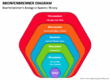
 Play and its relationship to Language, Literacy, Math and/or Science and in Early Childhood
Research Article and Annotated Bibliography
RESEARCH ARTICLE
Ross, E. (2023, May 17). Embracing Learning Through Play.
https://www.gse.harvard.edu/ideas/usable-knowledge/23/05/embracing-learning-through-play
ANNOTATED BIBLIOGRAPHY
Ross, E. (2023, May 17). Embracing learning through play. Harvard Graduate School of Education. This article from the Harvard Graduate School of Education highlights the essential role play in a child’s learning and development.
Ross makes the case that play-based learning promotes growth across several domains: cognitive, social, emotional, and physical. Children, given the freedom to explore, experiment, and discover meaning through enjoyable activities, thrive. The piece emphasizes that play isn’t just an extra; it’s a core method of learning, particularly during a child’s formative years. It also explores how educators can thoughtfully create spaces that promote curiosity, creativity, and problem-solving, using both structured and unstructured play.
This source is important for early childhood education because it helps connect research findings with their practical use in the classroom.
It effectively reinforces the core principles of child-centered pedagogy and is consistent with established frameworks, including play-based approaches and holistic developmental models. The source’s reliability is substantiated by its publication under the auspices of Harvard’s Graduate School of Education, and it is grounded in contemporary educational research. Consequently, this article serves as a particularly valuable resource for substantiating claims regarding the pivotal role of play in cultivating impactful learning experiences, thereby supporting the case for play-based methodologies within early learning environments.